What is the future development trend of solar street lights?
Jan 20, 2026
As a core product in the new energy lighting sector, solar street lights have gained widespread adoption in urban roads, rural infrastructure, parks, and scenic areas due to their key advantages of energy efficiency, environmental friendliness, and independent operation without grid connection. Against the backdrop of accelerating global energy transition, advancing “dual carbon” goals, and upgrading smart city development, this new energy lighting product is undergoing comprehensive innovation in technology, design, market, and ecological value.
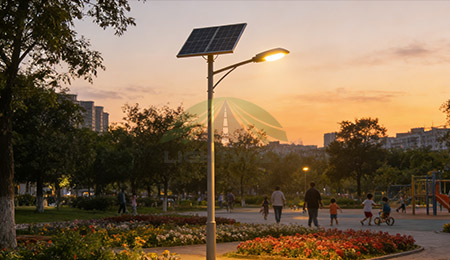
Exploring the future development trends of solar street lights not only provides direction for industry R&D and product iteration but also offers valuable insights for government infrastructure planning and corporate green transformation, contributing to the creation of low-carbon, intelligent, and sustainable living environments. This article analyzes the future development path of this product from four dimensions: technological breakthroughs, design optimization, market expansion, and environmental value.
Technological Advancements
High-Efficiency Solar Panels
As the core energy collection component, solar panels will focus on enhancing photovoltaic conversion efficiency and extreme environment adaptability. Current mainstream panels achieve conversion rates of approximately 18%-22%, with projections indicating breakthroughs exceeding 25% within the next 3-5 years. Novel materials and structural designs will further unlock solar energy utilization potential.
Simultaneously, low-light responsive panels will become a key R&D focus to address complex weather conditions like low illumination, overcast skies, and snowfall. These panels can operate efficiently under light intensity levels as low as 30% of the standard threshold, significantly reducing solar street lights' dependence on weather conditions and expanding their applicability in high-latitude and rainy regions.
Intelligent Motion Sensors
Embedded smart motion sensors will evolve toward “high precision and adaptive capabilities,” moving beyond simple presence detection to accurately identify humans and vehicles while tracking their trajectories. Equipped with AI algorithms, they automatically adjust brightness based on moving objects' speed and distance, enabling a dynamic dimming mode: low brightness during standby and high brightness upon detection.
This design maximizes energy savings and extends operational duration while minimizing unnecessary light pollution. It is particularly suited for scenarios like rural roads and park paths with low nighttime foot traffic, balancing energy efficiency and safety needs to further highlight the energy advantages of smart solar street lights.
Long-lasting Battery Systems
The performance of energy storage batteries directly determines the stable operation of solar street lights. Future breakthroughs will focus on “high capacity, long cycle life, and low maintenance.” New energy storage materials like lithium batteries and solid-state batteries will gradually replace traditional lead-acid batteries. Cycle life will increase from the current 1,000 cycles to over 2,000 cycles, extending the service life to 8-10 years.
The table below compares the core performance of traditional batteries versus future new batteries when applied to solar street lights:
|
Comparison Dimension |
Lithium-Ion Battery |
Traditional Lead-Acid Battery |
|
Cycle Life |
2,000–3,000 cycles |
300–500 cycles |
|
Charging Speed |
Fast charging, fully charged in 4–6 hours |
Slow charging, fully charged in 8–12 hours |
|
Energy Density |
High, compact size and lightweight |
Low, large size and heavy weight |
|
Service Life |
5–8 years |
1–3 years |
Advanced LED Technology
As the core light source for solar street lights, LEDs will undergo further optimization in brightness, energy consumption, and lifespan. Through chip technology upgrades, LED brightness will increase by over 30% while reducing power consumption by 15%-20%. The Color Rendering Index (CRI) will exceed 80, approximating natural light to enhance nighttime lighting comfort and safety.
Additionally, LED lifespan will extend beyond 100,000 hours. Combined with modular design, individual component replacement becomes feasible, significantly reducing long-term maintenance costs and meeting the economic demands of solar street lights in large-scale infrastructure projects.
Smart Remote Control
Leveraging IoT technology, solar street lights will integrate fully into intelligent management platforms, enabling remote monitoring, scheduling, and fault alerts. Operations personnel can use mobile or computer terminals to view real-time data on individual lamp power reserves, brightness levels, and operational faults, enabling precise problem identification and maintenance scheduling.
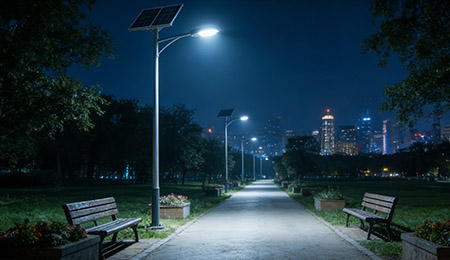
For city-wide large-scale lighting clusters, zone-based scheduling and intelligent dimming will be implemented. Operating modes will dynamically adjust based on foot traffic and traffic flow in different areas, maximizing operational efficiency and enhancing the practical value of integrating IoT technology with solar street lights.
Design and Aesthetics
Sleeker and More Compact Designs
Traditional solar street lights suffer from bulky designs and excessive space requirements due to large batteries and panels, making them unsuitable for urban cores or historic districts with stringent aesthetic standards. Future products will undergo a “slim-down upgrade” through high-efficiency miniaturized components.
Design-wise, batteries and panels will be integrated into a single unit, reducing volume by over 40% for a cleaner, more streamlined appearance that blends seamlessly with urban landscapes and architectural styles. Simultaneously, lightweight designs will simplify installation, minimize disruption to roads and green spaces, and better align with refined urban development needs.
Customizable Designs
Diverse user requirements are driving solar street lights toward customization. For government infrastructure projects, customizable designs incorporating local cultural elements or city logos can create distinctive urban landmarks. Commercial settings like parking lots and shopping districts can utilize high-brightness, anti-theft models that balance illumination and security.
For residential courtyards and private gardens, personalized products with diverse shapes and adjustable colors offer dual functionality as both lighting and decoration. Customization services will become a key driver for companies to enhance the competitiveness of their solar street light products.
Market Expansion
As technology matures and costs decrease, the application boundaries of solar street lights will continue to expand. Future market growth will concentrate in rural areas, developing countries, and specialized scenarios, forming a diversified layout.
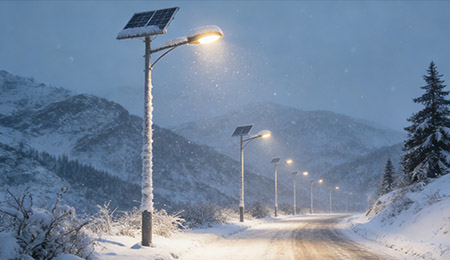
Rural and Remote Areas
Amid the global wave of rural revitalization and infrastructure upgrades in remote regions, solar street lights have emerged as the optimal lighting solution. These areas typically suffer from inadequate grid coverage and high wiring costs. Solar street lights, however, require no grid connection, offer easy installation, and feature low maintenance expenses.
They swiftly address lighting needs in public spaces like rural roads, squares, and village entrances while enhancing nighttime travel safety. By supporting rural cultural tourism and specialty agriculture, they have become indispensable new energy infrastructure for rural revitalization. Rural solar street lights will emerge as a core growth driver in the market.
Developing Countries
Developing nations are undergoing accelerated urbanization with robust infrastructure demands, while grappling with energy shortages and environmental pressures. Solar street lights, valued for their cost-effectiveness and sustainability, have become the preferred choice in these countries. Most developing governments have introduced subsidies and tax incentives to encourage new energy product adoption, further fueling market expansion. Over the next five years, the solar street light market in developing countries is projected to maintain a growth rate exceeding 15%.
Specialized Applications
Solar street lights have expanded beyond traditional road illumination to serve specialized scenarios. In parking lots, dedicated solar parking lights—with their high brightness and energy efficiency—have become the mainstream choice for commercial complexes and industrial parks. For parks and scenic areas, customizable low-brightness, decorative solar street lights balance illumination with ecological landscape preservation.
Additionally, demand for mobile, portable solar street lights will grow in settings like construction sites and temporary shelters, meeting temporary lighting needs and further diversifying solar lighting applications.
Environmental and Sustainability Considerations
Reduced Carbon Emissions
Traditional grid-powered street lights rely on fossil fuel-generated electricity, with each 100W lamp emitting approximately 0.8 tons of carbon annually. Solar street lights, powered by solar energy, have virtually zero carbon emissions throughout their lifecycle, making them exemplary low-carbon solar lighting products. Replacing all global road lighting with solar street lights could reduce carbon emissions by hundreds of millions of tons annually, significantly contributing to mitigating global warming and improving air quality.
Energy Conservation
Solar street lights operate on a self-sufficient “daytime energy storage, nighttime illumination” model, eliminating grid power consumption and effectively alleviating peak nighttime electricity demand pressures in cities. Calculations indicate that a single standard solar street light saves approximately 365 kWh of electricity annually, equivalent to reducing 365 kilograms of standard coal consumption, demonstrating significant energy savings.
Use of Renewable Energy Sources
The widespread adoption of solar street lights increases public exposure to and recognition of renewable energy's value, driving growth in related industries like solar power and energy storage. Their large-scale deployment will also accelerate technological advancements and cost reductions in solar energy, laying the groundwork for other renewable applications such as photovoltaic power plants and residential solar systems. This contributes to building an energy system centered on renewable sources.
The future development of solar street lights involves synergistic advancement in technological innovation, design optimization, market expansion, and environmental value. As high-efficiency components and intelligent management technologies mature, these products will become smarter, more reliable, and aesthetically pleasing. Their application scenarios will continue to diversify, making them a core component of smart cities and green infrastructure.
related
-
Off-Grid Road Safety: The Cost-Benefit Analysis of Solar Road Studs in Provincial ProjectsJun. 24, 2026
-
 The Ultimate Checklist for Inspecting Road Studs Before Installation in Infrastructure ProjectsJun. 04, 2026
 -
 All-in-One vs. Split Solar Street Lights: Which is Better for the Philippine Climate?May. 26, 2026