Why We Need To Clean Solar Street Light Dust In Time?
Feb 03, 2026
In the daily operation of solar street light, many managers fall into a common misconception: believing surface dust is insignificant and requires no special cleaning, or even assuming rain will naturally wash it away. In reality, this seemingly minor dust is quietly eroding the lifespan and efficiency of solar street light, becoming an “invisible killer” that undermines their stable operation.
Timely dust removal is not optional—it is a critical measure to ensure stable power generation, extend service life, mitigate safety hazards, and reduce long-term operational costs. This article will thoroughly dissect the specific harms of dust accumulation, highlighting the importance of “prompt cleaning.”
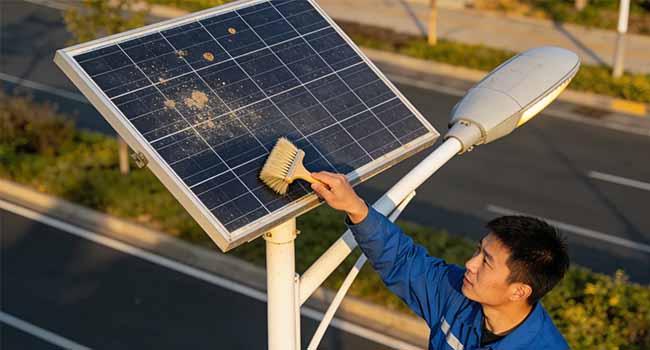
Why Solar street light Need To Be Cleaned In Time
Obstruction Effect
The solar panel, the core power-generating component of solar street light, relies entirely on sunlight absorption for efficiency. Dust accumulation directly obstructs light in two ways, impairing light collection. Firstly, dust covering the panel surface reduces the glass cover's light transmittance, allowing less sunlight to penetrate and reach the solar cells.
Second, dust particles alter the angle of sunlight incidence, preventing uniform light distribution within the panel and disrupting refraction and absorption pathways. Combined, these effects significantly reduce the panel's absorbed solar energy and power generation efficiency. This is particularly pronounced in industrial zones, high-traffic roadways, and arid, sandy regions where dust accumulates rapidly. Severe buildup can cause inadequate nighttime illumination or even complete failure to activate.
Temperature Effects
Many mistakenly believe dust directly alters panel temperature, but its impact is primarily indirect through impaired heat dissipation. Dust coating the surface increases thermal resistance—like wrapping the panel in a thick layer—slowing heat release. Solar panels are highly temperature-sensitive: higher temperatures reduce power generation efficiency.
More dangerously, dust-covered areas dissipate heat more slowly than dust-free zones. Solar street lights are prone to localized overheating—known in the industry as the “hotspot effect.” This phenomenon not only further reduces power generation efficiency but also accelerates the aging and damage of solar panel components. In severe cases, it can burn out solar cells, causing short circuits, fires, and other safety hazards that threaten road safety.
Corrosion Effects
Dust not only impairs power generation and heat dissipation but also causes corrosive damage to solar street light components, particularly panels with glass cover plates. In humid environments, dust particles absorb moisture to form wet dust. If this dust contains acidic or alkaline substances, it reacts chemically with the panel's glass cover plate and frame, gradually eroding the surface.
Without timely cleaning, the panel surface may become pitted and lose its luster over time, further reducing light transmission and causing a continuous decline in power generation efficiency. More critically, this corrosion damage is irreversible. Once the panel surface is severely eroded, it cannot be repaired and must be replaced with new components, significantly increasing the operational and maintenance costs of solar street light projects.
Practical Tips for Cleaning Solar Street Light Dust
Optimizing Cleaning Frequency
Adjust cleaning intervals based on environmental dust levels as follows:
Urban roads and residential areas: Clean every 1-3 months, adjusting for rainy/dry seasons.
Industrial zones, high-traffic roads, arid/sandy regions: Clean every 2 weeks, focusing on vehicle exhaust and dust accumulation. In rainy or humid regions, cleaning intervals may be extended to 3-6 months to prevent battery panel degradation from frequent washing.
Selecting Appropriate Cleaning Methods
Follow the principles of “gentle, non-corrosive, and scratch-free” cleaning. Specific steps: First, use a dry soft cloth or soft-bristle brush to lightly wipe the panel surface, removing surface dust without applying excessive force that could scratch the glass cover. For stubborn dirt, rinse with clean water first, then wipe dry with a soft cloth. Control water pressure during rinsing to prevent damage from high-pressure washers. Never use corrosive cleaners like laundry detergent, dish soap, or disinfectants, as they may corrode the panel surface.
Pay Attention to Cleaning Timing and Details
Solar street light cleaning is recommended during early morning, evening, or overcast days when temperatures are lower. Avoid cleaning during high temperatures to prevent thermal expansion and contraction of solar panels caused by cold water rinsing, which may lead to cracking or damage. Additionally, prioritize safety during cleaning—implement protective measures for high-altitude work to prevent accidents.
Cost-Benefit Analysis of Solar Street Light Dust Removal
Cleaning Costs Far Outweigh Replacement Costs
Economically speaking, the cost of regularly cleaning dust from solar street light is minimal, requiring only labor and basic cleaning supplies. Conversely, damage to solar panels caused by dust accumulation can lead to significantly higher component replacement costs. This is particularly true for large-scale, high-specification solar lighting projects, where replacement expenses often exceed cleaning costs by tens of times.
Significant Long-Term Benefits from Cleaning
Timely dust removal ensures stable power generation, reduces liability risks from accidents caused by insufficient lighting, extends panel lifespan, and lowers overall operational costs. Additionally, cleaned solar lights maximize energy-saving advantages, align with green lighting policies, and enhance project social benefits and brand image.
Cost Comparison Across Scenarios
Cleaning costs and benefits vary significantly by application scenario. In municipal road settings, cleaning safeguards public safety by preventing traffic issues caused by malfunctioning lights. In industrial parks, cleaning reduces component failure rates, avoiding production downtime losses. In rural areas, cleaning decreases maintenance frequency, enhancing the long-term value of street lights.
As clean, energy-efficient, and eco-friendly lighting solutions, the stable operation of solar street lights relies on routine maintenance—with dust removal being the most fundamental and critical component. Dust accumulation causes obstruction effects, temperature effects, and corrosion effects, directly leading to decreased power generation efficiency, accelerated component aging, increased safety hazards, ultimately shortening service life and raising operational costs. Prioritizing timely and proper dust removal for solar street lights not only ensures reliable illumination but also maximizes their energy-saving benefits, delivering long-term returns.
related
-
Off-Grid Road Safety: The Cost-Benefit Analysis of Solar Road Studs in Provincial ProjectsJun. 24, 2026
-
 The Ultimate Checklist for Inspecting Road Studs Before Installation in Infrastructure ProjectsJun. 04, 2026
 -
 All-in-One vs. Split Solar Street Lights: Which is Better for the Philippine Climate?May. 26, 2026