Debunking the Top 5 Myths About Solar Street Lights
Jan 28, 2026
Amid the global trend toward energy conservation, carbon reduction, and green development, solar street lights have gained widespread adoption in municipal roads, parks, rural areas, and other settings due to their core advantages: zero electricity costs, low operational expenses, and eco-friendly, low-carbon operation. However, many businesses and municipal departments remain hindered by prevalent misconceptions when considering solar street lights, ultimately missing out on this efficient and economical lighting solution. This article will systematically debunk the five most common misconceptions about solar street lights. Using solid technical facts, precise industry data, and real-world application scenarios, we will help you recognize the core advantages of solar street lights, eliminate decision-making concerns, and confidently embrace this new green lighting option.
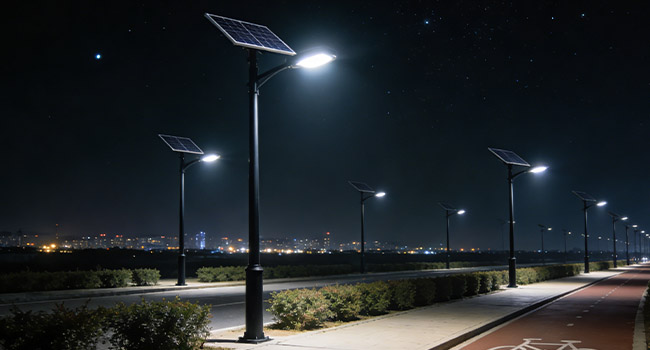
Myth: Solar street lights Don’t Work in Every Location
This is one of the most common misconceptions about solar street lights. Many believe that areas with heavy tree shade, frequent cloud cover, or high latitudes suffer from insufficient sunlight, rendering solar street lights unreliable and incapable of functioning properly. However, this is not the case. With rapid technological advancements, the environmental adaptability of solar street lights has significantly improved, enabling stable operation even in regions with poor sunlight conditions.
The core reason lies in breakthroughs in solar panel and battery technology: modern solar panels boast significantly improved photovoltaic conversion efficiency, effectively capturing scattered light even on cloudy days. Paired with batteries that fully store energy during daylight hours, they ensure continuous, stable illumination at night, fully capable of handling scenarios with unstable sunlight.
Myth #2: “Solar Street Lights are Not Bright Enough”
“Insufficient brightness” is a key reason many reject solar street lights, particularly worrying about their inability to meet high illumination requirements in municipal thoroughfares and commercial districts. This concern is unfounded. Modern solar street lights have long shed the label of “low brightness and poor illumination,” primarily due to the adoption of LED lighting technology. Their brightness and energy efficiency far surpass traditional street lights. Below is a comparison of brightness and energy efficiency between solar LED street lights and traditional street lights, with data for clearer illustration:
|
Lighting Type |
Luminous Efficacy (Lumens/Watt) |
Illumination Uniformity |
Energy Saving Rate |
|
Solar LED Street Light |
120–150 lm/W |
High (no obvious dark areas) |
70%–80% (compared with traditional street lights) |
|
Traditional High-Pressure Sodium Lamp (HPS) |
40–60 lm/W |
Low |
Baseline |
|
Traditional Metal Halide Lamp (MH) |
50–70 lm/W |
Medium (localized dark areas) |
20%–30% energy saving |
As shown in the table, solar LED street lights deliver 2-3 times the luminous efficacy per watt compared to traditional high-pressure sodium lamps. Not only do they provide ample brightness and superior illumination uniformity, but they also cover wider areas, making them a fully viable replacement for conventional street lights in diverse settings.
Myth #3: “Solar Street Lights Are Only for Rural or Temporary Use”
Many hold the outdated stereotype that solar street lights are low-powered and unstable, suitable only for rural paths, temporary construction sites, or other low-lighting-demand scenarios. They believe these lights cannot meet the needs of core urban settings like main thoroughfares or commercial districts. This perception is long obsolete. Modern solar street lights now offer full-scenario adaptability, with customizable power ratings and configurations to meet diverse lighting requirements.
Currently, solar street lights are being deployed in bulk along main thoroughfares and core commercial districts in numerous cities worldwide. For instance, riverside boulevards and industrial park main roads in several first-tier cities utilize high-power solar street lights. These installations not only meet high-intensity lighting demands but also achieve energy savings and reduced consumption, becoming key symbols of urban green development. Whether for city main roads, commercial districts, parks, campuses, rural roads, industrial zones, or temporary sites, solar street lights can be precisely tailored to any scenario without worrying about limitations.
Myth #4: “Solar Street Lights are Too Expensive Upfront”
“High initial cost” remains a key concern for many users, with some believing solar street lights are far more expensive to purchase and install than traditional grid-connected lights, offering poor value. However, as the solar industry has matured, upfront investment in solar street lights has significantly decreased, and their total lifecycle cost is now substantially lower than traditional lights, making them more cost-effective in the long run.
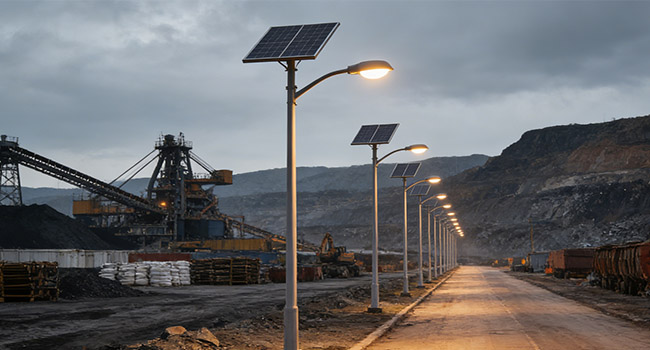
First, upfront costs have dropped dramatically. Over the past two decades, manufacturing costs for core components like solar panels and batteries have fallen by over 70%. Today, the initial purchase cost of high-quality solar street lights is comparable to traditional options, with some small-to-medium power products even matching prices. Second, the lifecycle cost advantage is substantial, as illustrated below:
|
Cost Type |
Solar Street Lights |
Traditional Grid-Powered Street Lights |
|
Initial Procurement Cost |
Medium (decreasing year by year) |
Slightly lower |
|
Installation Cost |
Low |
High |
|
Annual Operating Cost |
Very low |
High |
|
Total Life cycle Cost (10 Years) |
Low |
High |
Beyond this, utilizing solar street lights aligns with environmental protection and energy conservation policies. Businesses and municipal departments in certain regions may qualify for policy support such as carbon reduction subsidies and green project incentives, further lowering investment costs.
Myth #5: Solar Street Lights Require Constant Maintenance
Many worry that solar street lights, composed of multiple components like solar panels, batteries, and LED lights, have complex structures demanding frequent repairs and part replacements—resulting in troublesome and costly operations. The reality is quite the opposite. Solar street lights require significantly less maintenance than traditional grid-connected street lights, making them a “low-maintenance, worry-free” product. Their core components are designed for extended longevity, substantially reducing both maintenance workload and costs. Below is a clear and straightforward breakdown of the lifespan and maintenance requirements for key solar street light components:
|
Core Component |
Service Life |
Maintenance Requirements |
|
LED Light |
50,000–100,000 hours (approx. 5–10 years) |
Virtually maintenance-free; replacement only required at end of lifespan |
|
Solar Panel |
25+ years |
Quarterly cleaning to remove dust and debris from the surface |
|
Battery |
5–8 years |
No routine maintenance required; replacement at end of service life |
More importantly, solar street lights eliminate the need for underground cabling, avoiding the frequent maintenance hassles associated with traditional street lights due to cable aging, damage, or theft. This further reduces operational and maintenance costs and workload, truly achieving “low-maintenance after installation.”
As the global trend toward green energy conservation continues to advance, solar street lights—as an efficient, low-carbon, and economical lighting solution—will see broader adoption in the future. Dispelling common misconceptions about solar street lights and recognizing their technological advantages and practical value are essential to fully embrace the new era of green lighting.
related
-
Off-Grid Road Safety: The Cost-Benefit Analysis of Solar Road Studs in Provincial ProjectsJun. 24, 2026
-
 The Ultimate Checklist for Inspecting Road Studs Before Installation in Infrastructure ProjectsJun. 04, 2026
 -
 All-in-One vs. Split Solar Street Lights: Which is Better for the Philippine Climate?May. 26, 2026