4 Common Misconceptions About Solar Street Lights
Jan 26, 2026
Amid the global shift toward green and low-carbon development, solar street lights have gained widespread adoption in municipal roads, park courtyards, rural paths, scenic trails, and other settings due to their energy efficiency, environmental friendliness, and ease of installation. Market demand continues to rise year after year. However, despite the maturing technology, many users remain constrained by outdated perceptions, harboring numerous misconceptions. These misunderstandings not only hinder informed selection but also impede the widespread adoption of solar street lights. This article debunks four core misconceptions about solar street lights, clarifying their true performance and value to provide professional guidance for selection and usage.
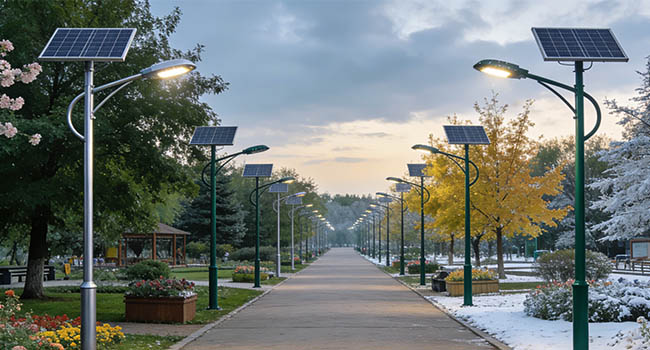
Misconception 1: Inability to Function During Cloudy/Rainy Weather with Extremely Poor Endurance
High-Efficiency Solar Panels
Many users mistakenly believe solar street lights require direct, intense sunlight and cease operation during overcast or rainy conditions. This is not the case. Modern solar street lights are equipped with high-efficiency solar panels that excel at generating power under low-light conditions. Even in scenarios with insufficient sunlight, such as overcast skies or haze, they can still produce electricity through scattered light. This allows them to replenish the battery with basic power, ensuring fundamental lighting needs are met and breaking free from the limitation of relying solely on strong sunlight.
Energy Storage and Regulation
The core support for endurance stems from the synergistic effect of energy storage batteries and intelligent control systems. Mainstream solar street lights feature high-capacity sealed lithium batteries that efficiently store surplus energy from sunny days. Standard configurations support continuous operation for 3-7 consecutive days of cloudy or rainy weather, with customizable durations based on specific applications. Simultaneously, intelligent controllers automatically adjust brightness: high intensity during the first half of the night to meet traffic needs, switching to energy-saving mode in the latter half to maximize runtime. This eliminates the hassle of lights going out during inclement weather.
Misconception 2: High Initial Cost, Low Long-Term Value
Total Cost: Initial Investment ≠ Total Expenditure
While the initial purchase price of solar street lights is slightly higher than traditional grid-connected lights, total cost must consider installation and long-term operation. Conventional lights incur expenses for cable laying, road excavation, transformer configuration, and complex site preparation—often doubling costs. Solar lights eliminate wiring construction, reducing installation costs by over 50%. They are particularly suited for remote areas and complex terrain projects, significantly cutting upfront investment.
Long-Term Benefits: Zero Electricity Bills + Low Maintenance Costs
From a long-term usage perspective, solar street lights demonstrate exceptional cost-effectiveness with pronounced differences across various cost dimensions. While their initial purchase price is slightly higher, the absence of wiring installation and road excavation fees results in lower overall installation costs. Conventional grid-connected lights have a lower purchase price but incur multiple expenses like wiring, excavation, and transformer configuration, leading to higher upfront investment.
Regarding long-term operational costs, solar street lights incur zero electricity fees throughout their lifespan. Core components last 5-8 years, requiring only 1-2 simple maintenance checks annually. Conventional grid-connected lights demand ongoing electricity payments, plus regular circuit inspections and component replacements, resulting in persistently high annual operating costs.
In terms of cost recovery cycles, solar street lights typically recoup the cost difference compared to conventional grid-connected lights within about 5 years under standard usage scenarios. Conventional grid-connected lights lack a cost difference recovery mechanism, incurring ongoing operational expenses that escalate over time. Combined with renewable energy subsidies in certain regions, solar street lights further reduce initial investment, offering significant long-term cost advantages. They represent the preferred solution for municipal and park projects.
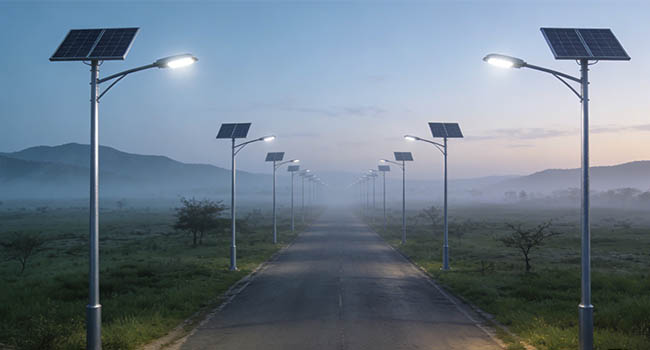
Misconception 3: Fragile Materials with Poor Weather Resistance Requiring Frequent Maintenance
Weather-Resistant Materials
Material performance is the core guarantee for outdoor use. Solar panels feature tempered glass encapsulation, offering high surface hardness, impact resistance, and corrosion protection to withstand external forces like wind, sand, and hail. Sealed lithium batteries meet IP65 or higher waterproof and dustproof ratings, operating reliably in extreme temperatures from -20°C to 60°C. They withstand harsh conditions including high heat, severe cold, and heavy rain, adapting to diverse regional climates.
Structural Design
Structurally, the integrated solar street light design minimizes component connection points, achieving wind resistance ratings exceeding Level 10. It withstands severe convective weather like typhoons with ease, significantly reducing failure rates. Maintenance requires only 1-2 annual cleanings of solar panel surfaces to remove dust, with no additional upkeep needed. Maintenance costs are substantially lower than traditional street lights' wiring repairs and component replacements, offering both durability and cost-effectiveness.
Misconception 4: All Solar Street Lights Are Identical—Price Is the Only Factor
Core Components
Solar street lights are not homogeneous products; core components directly determine performance and lifespan. Solar panel power affects generation efficiency—insufficient power leads to inadequate energy storage. Battery capacity determines runtime—insufficient capacity risks outages during prolonged cloudy or rainy periods. Smart controllers regulate energy consumption; substandard controllers accelerate battery degradation and shorten product lifespan. Low-cost, inferior products often use inefficient panels and refurbished batteries. While seemingly economical, they harbor hidden risks and ultimately increase replacement costs.
Cost-Effective Selection Based on Needs
Rural paths can utilize 30-50W low-power, long-endurance solar street lights. Main pathways in parks and municipal roads require 80-120W high-power, high-brightness configurations. Areas with weak sunlight necessitate pairing high-efficiency solar panels with large-capacity batteries. Prioritize certified brand products with testing reports. Customize solutions based on sunlight conditions, road width, and lighting duration to truly balance practicality and cost-effectiveness, avoiding pitfalls from blind price comparisons.
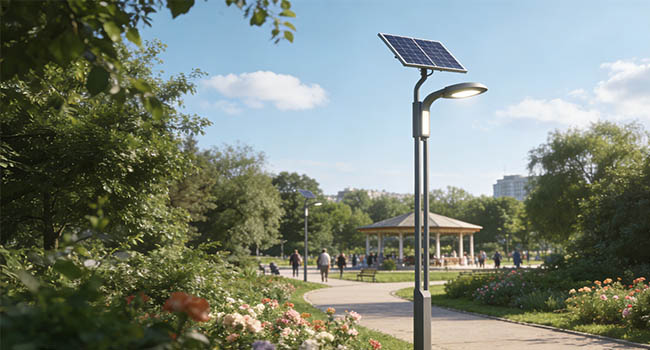
Key Techniques for Proper Solar Street Light Selection
Select Based on Sunlight Conditions
In areas with ample sunlight, battery capacity can be appropriately reduced to lower costs. Regions with low sunlight require high-efficiency solar panels and large-capacity storage batteries to ensure long-lasting performance from the source.
Match Usage Scenarios
Determine power output and brightness based on road width, foot traffic, and lighting requirements. Rural paths and alleys suit 30-50W low-power, long-endurance models, while main campus roads and municipal streets require 80-120W high-power solar lights.
Focus on Core Configuration Parameters
Prioritize solar panel conversion efficiency, battery capacity and cycle life, and smart controller functionality. Reject products with inefficient panels, refurbished batteries, or other substandard components.
Choose Reputable Brand Products
Select brands with formal production certifications, comprehensive testing reports, and robust after-sales service. Avoid low-cost, unwarrantied products to fundamentally ensure quality and user experience.
Overcome cognitive biases and recognize the technical advantages and comprehensive value of solar street lights to accurately match project requirements and achieve scientifically informed selection. Their core competitiveness in energy conservation, carbon reduction, cost control, and adaptability aligns with global green development trends.
By rationally evaluating configurations and costs while tailoring solutions to specific scenarios, solar street lights can deliver lasting value, empower diverse lighting projects, and accelerate the implementation of green infrastructure.
related
-
Off-Grid Road Safety: The Cost-Benefit Analysis of Solar Road Studs in Provincial ProjectsJun. 24, 2026
-
 The Ultimate Checklist for Inspecting Road Studs Before Installation in Infrastructure ProjectsJun. 04, 2026
 -
 All-in-One vs. Split Solar Street Lights: Which is Better for the Philippine Climate?May. 26, 2026