How Reflective Road Studs Reduce Accidents in High-Speed Zones
Mar 24, 2026
Traffic safety in high-speed zones has always been a core priority for road management, and the lack of visual guidance is one of the key factors behind the persistently high accident rates. As an effective road safety measure, reflective road studs—with their unique retroreflective properties and practical design—can address the shortcomings of visual guidance in high-speed zones from multiple angles, thereby effectively reducing the risk of accidents. This will provide a detailed analysis of the safety value of reflective road studs in high-speed zones by examining the visual guidance requirements of such areas, the working principles of reflective road studs, and their accident prevention mechanisms, thereby offering insights for road safety infrastructure development.
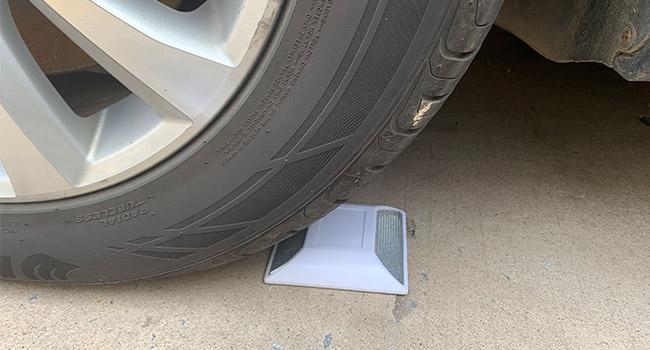
Why High-Speed Zones Urgently Require Superior Visual Guidance
Core Characteristics of Driving in High-Speed Zones
The driving environment in high-speed zones differs significantly from that of ordinary roads, and its core characteristics determine the critical importance of visual guidance. Vehicle speeds on expressways generally reach ≥80 km/h, with some sections exceeding 120 km/h. The faster the speed, the shorter the driver’s reaction time. Additionally, expressways often feature long straightaways, consecutive curves, or tunnels, resulting in numerous blind spots. Combined with heavy traffic volume and frequent lane changes, this places extremely high demands on the clarity and stability of visual guidance.
Obvious Limitations of Existing Visual Guidance
Currently, visual guidance on expressways primarily relies on standard road markings, but this method has significant shortcomings. At night, standard markings have poor reflectivity and a short visibility range. In adverse weather conditions such as rain, heavy fog, or sandstorms, the markings are easily washed away by rain or obscured by fog, rendering them virtually ineffective. The failure of this visual guidance system can easily lead to driver misjudgment, resulting in accidents such as lane departure or collisions.
Supporting Data on Accidents in Expressway Areas
Relevant data indicates that accidents in expressway areas are frequently linked to poor visibility, with incidents occurring at night and during adverse weather conditions accounting for a particularly high proportion. The specific data is as follows:
|
Scenario |
Accident Proportion |
Main Causes |
|
High-speed driving at night |
More than 60% |
Insufficient visibility, blurred lane boundaries |
|
High-speed driving in rainy weather |
Around 35% |
Ordinary road markings covered by rain, low visibility |
|
Fog / Sandstorm conditions |
Around 28% |
Obstructed visibility, unable to identify lane boundaries |
Clearly, improving the quality of visual guidance on highways is a key measure for reducing accident rates, and the introduction of reflective road studs precisely addresses this core challenge.
How Reflective Road Studs Work
Core Technology: The Principle of Retroreflection
The core operating principle of reflective road studs is retro-reflection. When vehicle headlights strike the surface of the stud, the light is reflected back toward the driver along the original direction of illumination, ensuring that drivers can clearly see the stud’s luminous signal from a distance. This principle differs from ordinary reflection in that the reflected light is highly directional and is not significantly affected by the angle of illumination, providing drivers with stable visual cues even under complex road conditions.
Key Components and Product Advantages
High-quality reflective road studs primarily consist of three key components: a high-transmittance lens, a high-brightness reflective film, and a sturdy base. The high-transmittance lens maximizes the capture of vehicle headlights while minimizing light loss, while the reflective film efficiently reflects the light to ensure visibility. The sturdy base is designed to withstand the impact of high-speed vehicles, featuring wear-resistant, waterproof, and impact-resistant properties that are well-suited for the complex road conditions of expressways. Additionally, these road studs offer a long service life and low maintenance costs, eliminating the need for frequent replacement and providing stable visual guidance on highways over the long term.
How Road Studs Reduce Accidents on Highways
Enhancing Night-Time Visibility
Nighttime is a high-risk period for highway accidents, primarily due to insufficient lighting. Conventional road markings become blurred, making it difficult for drivers to clearly identify lane boundaries, which can lead to lane drift and subsequent collisions. At night, reflective road studs create a continuous luminous path that clearly defines lane boundaries. Even on unlit highway sections, they allow drivers to clearly determine their direction of travel. The table below compares the nighttime visibility of standard road markings with that of reflective road studs.
|
Guidance Method |
Night Visibility Distance |
Visibility Clarity |
Lane Guidance Effect |
|
Ordinary road markings |
≤100 m |
Blurred, easily affected by vehicle lights |
Poor, prone to lane drifting |
|
Reflective road studs |
≥300 m |
Clear, stable reflection |
Good, effectively prevents lane drifting |
Ensuring Visibility in Harsh Weather
Harsh weather conditions such as rain, fog, and sandstorms can severely obstruct drivers’ vision. Conventional road markings are easily washed away by rain or obscured by fog, rendering them virtually ineffective. Under such conditions, drivers are highly likely to lose track of lane boundaries, leading to accidents. The high-reflectivity lenses of reflective road studs are waterproof and fog-resistant, remaining unaffected by adverse weather conditions. Even during heavy rain or dense fog, they continue to emit clear reflective signals, providing drivers with reliable lane guidance.
Improving Reaction Time
The core challenge of high-speed driving is the short reaction time. At a speed of 100 km/h, a vehicle can travel approximately 28 meters in one second; if the driver fails to react in time, it can easily lead to a serious accident. Retroreflective road studs provide drivers with early warnings of hazardous areas such as curves, intersections, and obstacles. Through continuous light signals, they allow drivers to anticipate their driving path in advance, ensuring ample reaction time. Clear visual guidance reduces driver misjudgments, creating a complete chain of “visual cue → early anticipation → timely reaction,” effectively reducing collision accidents caused by delayed reactions.
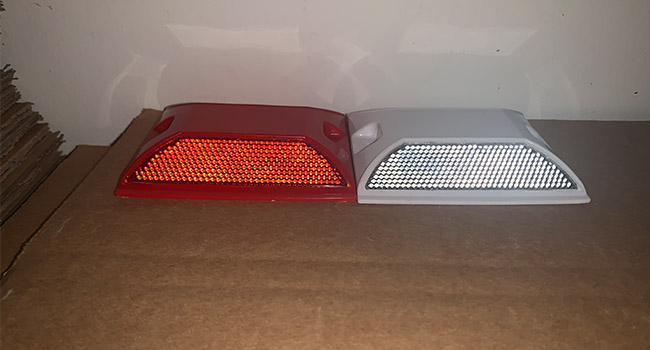
Reducing Headlight Glare Confusion
On wide stretches of highway, glare from oncoming headlights is a common issue. Glare can cause blurred vision and misjudgment, making it highly likely for drivers to drift out of their lanes and trigger head-on collisions. Raised reflective road studs effectively address this issue. Their raised design prevents them from being obscured by headlight glare while emitting a strong, stable reflective signal that penetrates the glare. Even in the presence of oncoming headlight glare, drivers can clearly identify lane boundaries, avoid lane departures, and ensure driving safety.
Alerting Drivers Through Tactile Feedback
During long-distance highway driving, drivers are prone to fatigue and distraction, which can lead to unintentional lane drift—a major contributing factor to highway accidents. High-quality reflective road studs feature a raised design. When a vehicle drifts out of its lane and rolls over the studs, they produce a slight vibration and audible sound. This dual tactile and auditory feedback alerts drivers to correct their course promptly. This tactile feedback effectively alerts fatigued or distracted drivers, preventing unintentional lane departures and further reducing the incidence of highway accidents.
Key Factors in Selecting High-Quality Reflective Road Studs
Reflectivity
Retro-reflectivity is the core function of reflective road studs, and it is primarily determined by the retro-reflectivity coefficient. The higher the coefficient, the better the reflective effect, and the greater the visibility at night and in adverse weather conditions. It is recommended to select reflective road studs with a retro-reflectivity coefficient that meets national or international standards to ensure clear visual guidance in all scenarios.
Durability
Highway sections experience heavy traffic and high vehicle speeds, and reflective road studs must withstand frequent vehiclecrushing, so they must possess excellent durability. High-quality reflective road studs should be wear-resistant, impact-resistant, waterproof, and capable of withstanding extreme temperatures, enabling them to adapt to the complex environment of highway sections, extend their service life, and reduce maintenance costs.
Ease of Installation
Given the heavy traffic volume on highways, the installation of reflective road studs should minimize disruption to traffic flow. Therefore, selecting products that are easy to install and highly efficient is particularly important. High-quality reflective road studs feature a user-friendly installation design that does not require extensive road closures, allowing for rapid installation and minimizing traffic disruption during construction.
Compliance
As road safety equipment, reflective road studs must comply with international or local road safety standards. Selecting compliant products ensures driving safety while avoiding safety hazards and management issues caused by non-compliant products.
As an efficient and practical road safety facility, reflective road studs effectively address the shortcomings of visual guidance in highway areas through multiple functions, including enhancing nighttime visibility, withstanding adverse weather conditions, extending drivers’ reaction times, reducing glare interference, and providing tactile feedback. This significantly reduces the incidence of highway accidents. Reflective road studs effectively enhance driving safety on highway sections while offering advantages such as easy maintenance, a long service life, and controllable costs, making them a vital choice for highway safety infrastructure.
related
-
Off-Grid Road Safety: The Cost-Benefit Analysis of Solar Road Studs in Provincial ProjectsJun. 24, 2026
-
 The Ultimate Checklist for Inspecting Road Studs Before Installation in Infrastructure ProjectsJun. 04, 2026
 -
 All-in-One vs. Split Solar Street Lights: Which is Better for the Philippine Climate?May. 26, 2026