Illuminate Your Outdoor Space with Solar LED Lights
Mar 26, 2026
The atmosphere and functionality of an outdoor space often hinge on high-quality lighting design. Traditional outdoor lighting not only relies on mains power but also presents numerous issues, such as complex wiring, high electricity bills and environmental pollution, which deter many homeowners, property managers and DIY enthusiasts.
The advent of solar LED lights has completely resolved this dilemma. With their energy efficiency, environmental friendliness and ease of installation, they have become the preferred solution for illuminating outdoor spaces. Whether for garden paths, the exterior walls of a home, garden landscaping or large terraces, solar LED lights can be precisely tailored to suit the needs of different settings, creating an outdoor lighting system that combines aesthetic appeal with functionality.
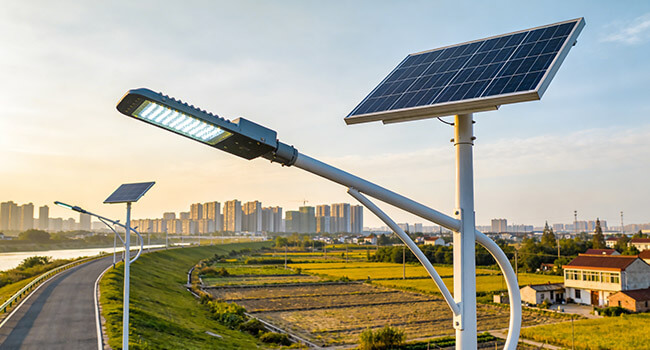
The Advantages of Solar LED Lights
Energy Efficiency
Solar LED lights rely solely on solar energy and do not require connection to the mains grid, thereby eliminating electricity costs at source. In regions with ample sunlight, their energy-saving benefits are particularly pronounced. Taking standard household outdoor lighting as an example, traditional LED street lights incur monthly electricity charges, whereas solar LED lights generate no such costs, leading to sustained savings over the long term. Particularly in sun-drenched cities such as Delhi and Gurgaon, solar panels can efficiently absorb solar energy, ensuring a continuous and stable power supply to the lights, making the energy-saving benefits immediately apparent.
Environmental Impact
Traditional lighting relies on electricity generated from fossil fuels, a process that produces large amounts of carbon dioxide and pollutants, exacerbating pressure on the urban environment. Solar LED lights, however, utilise clean energy throughout their operation, producing no additional carbon emissions and effectively reducing individual carbon footprints. Taking outdoor solar-powered LED lights used for a certain number of hours each year as an example, compared to traditional grid-connected lighting of the same wattage, they can reduce carbon dioxide emissions by a significant amount annually, contributing to urban pollution control and perfectly aligning with today’s green and eco-friendly lifestyle.
Cost-Effectiveness
Many people hesitate due to the higher initial purchase cost of solar-powered LED lights compared to traditional lighting, but from a long-term perspective, their cost-effectiveness is very clear. We can compare the differences between solar-powered LED lights and traditional lighting across several key dimensions. In terms of initial purchase cost, solar-powered LED lights require a relatively higher investment, whilst traditional LED lighting falls at a moderate level and traditional incandescent bulbs have the lowest cost.
Regarding annual electricity costs, solar-powered LED lights incur no such expenses, whereas traditional LED lighting requires ongoing expenditure, and traditional incandescent bulbs incur even higher costs. In terms of lifespan, solar-powered LED lights can last 5–8 years, traditional LED lighting 3–5 years, and traditional incandescent bulbs just 1–2 years. When considering the total cost of ownership over the long term, the overall expenditure for solar-powered LED lights is far lower than that of traditional lighting. Furthermore, as they do not require professional wiring or installation, they also save on installation costs, making them a true ‘one-off investment with long-term benefits’.
Easy Installation
Solar LED lights require no complex wiring or professional electrical connections; the installation process is extremely straightforward. Simply place the fixture in the designated location (such as on the ground or a wall) according to the model, ensuring the solar panel faces a sunny direction, and the installation is complete. Ordinary homeowners need not hire an electrician; they can upgrade their outdoor lighting themselves, saving on installation costs whilst enjoying the satisfaction of a DIY project.
Reliability and Durability
Solar LED lights are crafted from weather-resistant materials, capable of withstanding extreme conditions such as high temperatures, heavy rain and dust storms, making them well-suited to the climatic conditions of regions like India. Furthermore, their built-in high-efficiency rechargeable batteries ensure continuous illumination during power cuts, safeguarding night-time visibility in outdoor spaces and eliminating safety hazards caused by power outages. Their durability and reliability far exceed those of traditional lighting fixtures.
Types of Solar LED Lights for Your Outdoor Space
Solar Path Lights
Solar path lights are the ideal choice for outdoor footpaths, driveways and garden paths. With their compact and elegant design, they provide clear guidance for pedestrians and vehicles once installed on the ground, whilst enhancing safety when walking at night. Available in a wide variety of styles, ranging from modern and minimalist to vintage and classic, these lights offer adjustable brightness levels to suit your needs. They not only fulfil basic lighting requirements but also blend seamlessly with your outdoor décor. Whether for residential footpaths, villa garden paths or country lanes, solar path lights adapt perfectly to any setting, acting as an ‘invisible guide’ for your outdoor space.
Solar Wall Lights
Solar wall lights are primarily installed on the exterior walls of homes, entrance doors, and garage entrances, with their core function being to enhance outdoor security. Their concentrated and bright light clearly illuminates entrance areas and the perimeter of exterior walls, effectively deterring potential intruders and reducing security risks. Installation simply involves securing the fixture to the designated position on the wall and adjusting the beam angle; no additional electrical modifications are required, making them particularly suitable for older residential estates and villa exteriors. For homeowners who prioritise home security, solar wall lights are an indispensable piece of outdoor lighting.
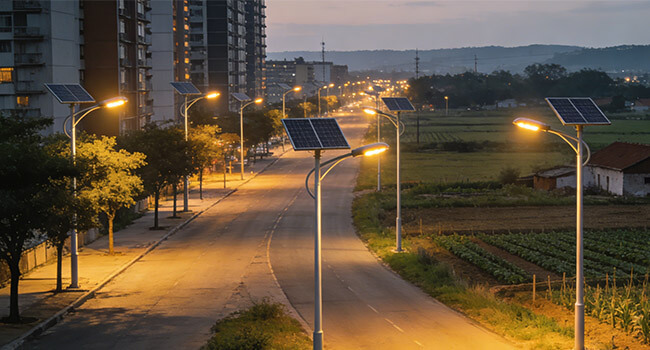
Solar Garden Lights
Solar garden lights are primarily decorative, designed specifically to illuminate landscape features such as plants, sculptures and fountains in the garden. Their light is soft and non-glaring, creating a warm and romantic atmosphere that adds depth and beauty to the garden at night. These lights come in a variety of designs, including creative styles such as flowers, stars and small animals, allowing for flexible coordination with the garden’s style. Whether creating a tranquil courtyard garden or a lively family gardening area, solar garden lights can add unique charm to the greenery, making outdoor spaces feel warmer and more inviting.
Solar Flood Lights
Solar floodlights are specifically designed for large outdoor spaces, such as terraces, courtyards and lawns. With a wide coverage area and an angle of up to 120°–180°, they provide illumination with no blind spots, making them ideal for outdoor gatherings, barbecues and similar events. These lights offer high brightness and long battery life, maintaining stable illumination even on overcast days, thereby meeting the basic lighting and atmospheric requirements of large spaces. For property managers, solar floodlights are also an excellent lighting choice for public areas such as estates and squares, significantly enhancing the night-time experience of these spaces.
Solar Spotlights
Solar spotlights feature adjustable beam angles, allowing precise focusing on key features such as trees, architectural details and landscape sculptures in gardens. By adjusting the angle and brightness of the light, the unique textures of the landscape can be highlighted, transforming them into visual focal points at night. These compact fixtures offer flexible installation options—they can be placed on the ground, mounted on stands, or fixed to walls or tree trunks—making them suitable for a wide range of landscape decoration scenarios. For creating a layered garden nightscape, solar spotlights are an indispensable ‘finishing touch’.
Tips for Installing Solar LED Lights
Choosing the Right Installation Location
The solar panel is the ‘energy core’ of the light fixture. When installing, ensure it receives 6–8 hours of direct sunlight. Prioritise open, unobstructed locations and avoid placement behind trees, buildings or awnings, as these can block sunlight. Insufficient light absorption will affect the light’s battery life and brightness. Particularly in cities such as Delhi and Gurgaon, where summer daylight hours are long; planning the installation location carefully can increase the battery life of solar LED lights by over 30%.
Avoid Shaded Areas
In addition to avoiding obstructions to the solar panels, you should also avoid areas that are permanently shaded. Shade will continuously affect the charging efficiency of the solar panels, causing the battery to remain in a ‘discharged’ state for extended periods and accelerating battery degradation. Before installation, observe sunlight conditions at different times of the day and mark out the optimal, shadow-free installation area to ensure the lights charge fully and extend their overall service life.
Adhere to height specifications
Different types of solar LED lights have specific installation height requirements, which must be strictly followed to ensure effective illumination. Pathway lights, for example, should be installed at a height of 12–18 inches (approximately 30–45 centimetres) to match the walking height of footpaths and trails, avoiding installation that is too high (which causes light to scatter) or too low (which obstructs passage).
Planning Spacing Appropriately
Spacing directly affects the uniformity of lighting in outdoor spaces. The spacing between different types of luminaires must be planned appropriately. Pathway lights should be spaced 2–3 feet (approx. 0.6–0.9 metres) apart and arranged evenly along footpaths and trails to avoid gaps in illumination. Wall lights should be spaced 3–5 metres apart, adjusted according to the length of the wall and lighting requirements, with a focus on key areas such as the front door and garage. Floodlights should be spaced 10–15 metres apart for large spaces (such as courtyards and squares) to ensure comprehensive coverage without blind spots; the spacing of spotlights should be adjusted according to the number of features, with 1–2 lights per feature to avoid overlapping or missed illumination.
Regular Maintenance
Although solar LED lights are durable, regular maintenance can further extend their lifespan. On a daily basis, dust and fallen leaves should be regularly cleaned from the surface of the solar panels to ensure efficient light absorption. The battery status should be checked every 3–6 months. If there is a noticeable drop in battery life, replace the battery promptly. At the same time, check whether the screws on the luminaires are loose or the casing is damaged, and repair or replace any damaged parts in a timely manner. By carrying out basic maintenance, the service life of solar LED lights can be extended by 1–2 years.
From energy efficiency and environmental friendliness to cost-effectiveness and practicality, and from a diverse range of products to professional installation, solar LED lights have long been the ideal choice for upgrading outdoor lighting. Whether creating a cosy private garden or optimising lighting in public spaces, they illuminate every outdoor setting with green technology. Choosing solar LED lights means embracing a low-carbon, high-efficiency lifestyle, allowing light and shadow to coexist with nature, and bestowing lasting comfort and beauty upon outdoor spaces.
related
-
Off-Grid Road Safety: The Cost-Benefit Analysis of Solar Road Studs in Provincial ProjectsJun. 24, 2026
-
 The Ultimate Checklist for Inspecting Road Studs Before Installation in Infrastructure ProjectsJun. 04, 2026
 -
 All-in-One vs. Split Solar Street Lights: Which is Better for the Philippine Climate?May. 26, 2026