Outdoor Solar Street Light IP67 Submersion Resistance Guide
Jan 08, 2026
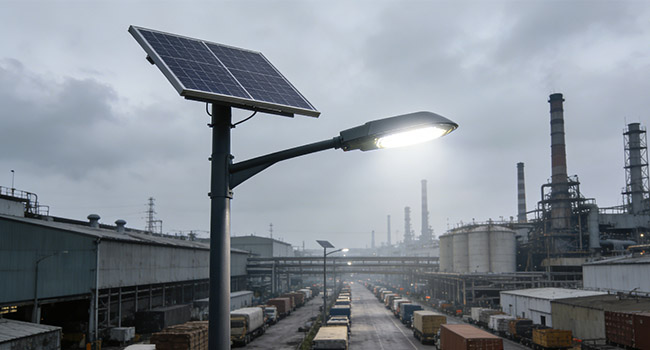
Outdoor solar street lights endure prolonged exposure to complex natural environments, where dust intrusion and rain immersion directly impact operational stability and service life. The IP67 protection rating, as an internationally recognized high-level standard, provides critical safeguards for solar street lights in harsh conditions. This document explores the definition of IP67 protection, its significance for solar street lights, applicable advantages, and testing/certification procedures. It aims to provide comprehensive guidance on protective performance for industry professionals and procurement personnel.
What is IP67 Protection?
Foundations of the IP Protection Rating System
The IP Protection Rating (Ingress Protection Rating) is an internationally recognized standard for equipment protection. It consists of two digits:
The first digit indicates dust protection (ranging from 0 to 6). while the second digit indicates water resistance, ranging from 0 to 8, with higher numbers signifying stronger protection.
Specific Definition of IP67 Rating
The “6” in IP67 denotes complete dust protection, meaning the device is fully sealed against dust ingress. It effectively prevents any particulate matter from entering the interior under any dusty conditions, thereby avoiding wear or short circuits caused by dust accumulation on internal components. The “7” rating for water resistance is the core waterproofing indicator of IP67. Specifically, it means the device can be temporarily submerged in 1 meter of water for 30 minutes without any water ingress damage. This performance is crucial for scenarios like heavy rain accumulation or short-term flood immersion.
The Specific Significance of IP67 for Solar Street Lights
Core components of solar street lights—such as controllers, batteries, LED light sources, and solar panel connection points—are highly sensitive to water and dust. The comprehensive protection offered by IP67 directly prevents these critical parts from failing due to water ingress or dust accumulation, ensuring stable lighting performance and extended operational endurance.
Why Choose IP67-Rated Solar Street Lights?
Superior Water Resistance
IP67-rated solar street lights deliver exceptional water penetration resistance. They operate reliably even during heavy downpours or prolonged rainfall causing road flooding. Their sealed design completely blocks water ingress, preventing electrical component short circuits and battery damage.
Comprehensive Dust Protection
In dusty environments like deserts, construction sites, or mining areas, the complete dust proofing of IP67-rated solar street lights proves crucial. It prevents sand and dust from entering the lamp body, avoids dust accumulation on LED light sources that could impair illumination, and protects internal components from abrasive wear, ensuring long-term stable performance.
Extended Lifespan and Reduced Long-Term Maintenance Costs
With core components effectively shielded, IP67-rated solar street lights typically outlast standard-rated models by 3-5 years. Significantly lower failure rates reduce on-site maintenance frequency and replacement part costs, delivering markedly improved long-term return on investment.
Wide Applicability And Strong Compatibility
Whether deployed on urban thoroughfares, residential communities, remote rural roads, coastal embankments, or flood-prone areas, IP67-rated solar street lights adapt seamlessly. Their robust environmental resilience makes them the universal preferred solution for diverse outdoor lighting projects.
Performance in Flood-Prone Areas
Stable Operation After Short-Term Submersion
Meeting IP67 standards, these lights resume normal operation immediately after 30 minutes submerged in 1-meter-deep water. In flood-prone areas, they withstand seasonal flooding without water ingress damage.
For instance, on rural roads in rainy regions, prolonged rainfall during the monsoon season often causes road flooding typically 0.5-1 meter deep for 10-20 minutes. IP67 solar lights maintain stable illumination after floodwaters recede, whereas standard IP54 lights frequently experience short-circuit failures.
Long-Term Durability in Humid Environments
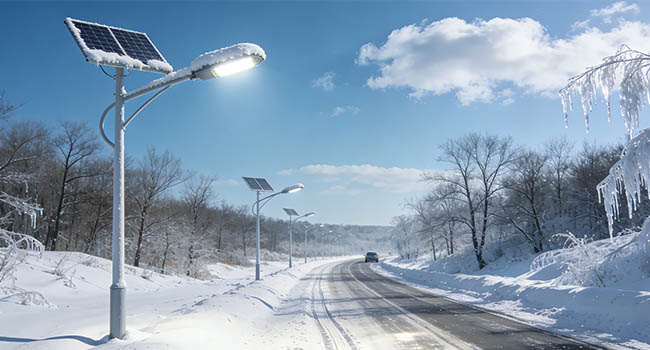
Flood-prone areas often feature high humidity, and coastal flood zones may additionally face salt spray corrosion. The sealed design of IP67-rated solar street lights not only prevents water ingress but also blocks moisture and salt spray from entering the equipment. Their lamp bodies are typically constructed from corrosion-resistant aluminum alloy or stainless steel, with surfaces treated with special anti-rust coatings. This effectively resists prolonged exposure to humidity and salt spray, preventing performance degradation caused by component corrosion and ensuring long-term stable operation in humid conditions.
The Critical Role of Emergency Lighting
Flood disasters often cause power grid failures, rendering traditional grid-powered street lights completely inoperable. IP67-rated solar street lights, powered by solar energy storage, possess independent operational capabilities. Even during grid outages, they continue providing illumination. Reliable lighting during floods is vital for emergency rescue operations.
IP67-rated solar street lights provide rescue personnel with clear visibility, enabling swift rescue operations. They also offer lighting guidance for evacuating affected residents, enhancing evacuation safety.
IP67 Rating Testing and Certification Process
Certification Standard Basis
IP67 testing and certification strictly adhere to the international standard IEC 60529, which is equivalent to the domestic standard GB/T 4208. This standard clearly defines testing methods, environmental conditions, and evaluation criteria for IP protection ratings, ensuring the authority and universality of certification results.
Detailed Explanation of Core Test Items
This testing comprises two core components: dust resistance testing and water resistance testing. The dust resistance test involves placing the device in a sealed chamber filled with talcum powder for 8 consecutive hours, with the powder circulating throughout the period. The objective is to verify whether the device can completely prevent dust ingress, ensuring internal components remain unaffected by dust.
The water resistance test involves fully submerging the device in 1 meter of fresh water for 30 minutes while powered on. This verifies whether water ingress occurs under specified immersion conditions and whether the device maintains normal functionality.
Post-Test Verification
Following dust and waterproof testing, personnel conduct a comprehensive inspection of the solar street light. This includes:
- Checking for dust or water ingress on both the exterior and interior of the device.
- Testing all functionalities, such as illumination brightness, battery endurance, and charging efficiency, to ensure no performance degradation or malfunctions occur post-testing.
Importance of Certification
Formal IP67 certification provides effective assurance of a product's protective performance. Solar street lights that pass this certification have undergone rigorous verification by authoritative bodies, effectively mitigating the risk of “false labeling” associated with substandard products. For purchasers, selecting solar street lights with IP67 certification ensures the product meets actual protective requirements and avoids subsequent losses due to product quality issues.
The IP67 protection rating delivers exceptional dust and water resistance, providing reliable support for stable operation of solar street lights in diverse complex environments. It offers multiple advantages including extended service life, reduced maintenance costs, and broad adaptability to various scenarios. Selecting solar street lights with formal IP67 certification is a critical measure to ensure the quality of outdoor lighting projects and enhance long-term investment returns, while also laying a solid foundation for the all-weather stable operation of outdoor lighting facilities.
related
-
Off-Grid Road Safety: The Cost-Benefit Analysis of Solar Road Studs in Provincial ProjectsJun. 24, 2026
-
 The Ultimate Checklist for Inspecting Road Studs Before Installation in Infrastructure ProjectsJun. 04, 2026
 -
 All-in-One vs. Split Solar Street Lights: Which is Better for the Philippine Climate?May. 26, 2026