Reflective Road Studs: The Best Solution for Night-Time Visibility
Mar 17, 2026
According to road safety research data, although night-time traffic volumes are significantly lower than during the day, nearly 40% of road accidents occur at night, with poor visibility being the primary cause of these incidents. Traditional road markings are highly susceptible to fading and deterioration following prolonged compaction and weathering, exposing drivers to the safety risk of ‘driving blind’ when travelling at high speeds. Reflective road studs, utilising retroreflective technology, have emerged as the optimal solution to the problem of night-time road visibility.
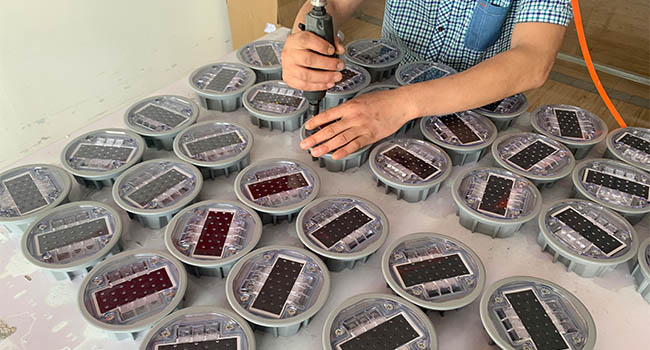
What Are Reflective Road Studs and How Do They Work?
Reflective road studs, also known as RPMs (Raised Pavement Markers), are small, durable traffic markers embedded in the road surface. Acting as a visual aid for drivers, their primary function is to clearly mark lane boundaries and the direction of the road in conditions of poor lighting or adverse weather. Compared to traditional road markings, reflective road studs offer superior durability and visibility, adapting to a wide range of complex road environments. They are widely used in various settings, including motorways, rural roads and urban thoroughfares.
Core Structure of Reflective Road Studs
The high efficiency of reflective road studs stems from their scientifically sound structural design, with each component working in concert to ensure long-term, stable performance. Their core structure primarily comprises three parts: the base, typically made of aluminium or polycarbonate, is hard in texture and can effectively withstand vehiclecrushing and road surface impacts, ensuring the stability of the stud’s installation and its service life.
The retro-reflective lens is the core component of the road stud, capable of directing the light emitted by vehicle headlights back towards the driver’s eyes, achieving the effect of ‘glowing when illuminated’. The protective casing is resistant tocrushing, impact and chemical corrosion, and can withstand erosion from external factors such as rain, snow and oil stains, adapting to the climatic conditions of different regions.
How Reflective Road Studs Work
The operating principle of reflective road studs is straightforward yet highly practical. When light from a vehicle’s headlights strikes the retro-reflective lens of a road stud, the lens reflects the light back in the original direction into the driver’s line of sight. This directional reflection design enables drivers to clearly see a continuous line of light at night, allowing them to accurately identify lane boundaries and road bends. Tests have shown that high-quality reflective road studs can increase night-time visibility to 800–1,000 metres, giving drivers more reaction time and thereby reducing the risk of accidents at source.
Different Reflective Studs
Plastic Reflective Road Stud
Plastic reflective road studs consist of a plastic body with an integrated reflector. They are characterised by their light weight, durability, simple installation process and relatively low cost, whilst offering inherent reflective properties. They are primarily suitable for low-traffic areas, temporary markings on motorways and basic lane markings, meeting fundamental requirements for night-time lane guidance. Ideal for sections with low traffic volumes and where a long service life is not essential, they offer high installation efficiency, enabling the rapid deployment of temporary road markings.
Aluminium Reflective Road Studs
Aluminium reflective road studs utilise high-quality aluminium as the main body, combined with acrylic or glass reflector panels. They offer resistance to heavy traffic, intense sunlight and extreme weather conditions, ensuring high durability and excellent visibility. They are suitable for long-term use on high-traffic surfaces such as motorways and busy urban arterial roads, withstanding the rigours of heavy vehicle traffic and complex climatic conditions. The robust nature of aluminium ensures a significantly longer service life than plastic road studs, whilst the light transmission properties of the reflective panels guarantee effective night-time visibility even after prolonged use.
Ceramic Reflective Road Stud
Ceramic reflective road studs are constructed primarily from high-temperature-resistant ceramic, with reflective surfaces made of glass or acrylic, providing 360° reflectivity. The material is robust and impact-resistant; when run over by vehicles, it produces a distinct noise and vibration, offering tactile feedback to promptly alert drivers of lane deviation.
Ceramic reflective road studs are suitable for areas with heavy traffic, adverse weather conditions, and sections requiring tactile alerts. The high-temperature resistance and corrosion resistance of the ceramic material ensure stable performance even in regions with high temperatures, heavy rainfall, and heavy snowfall, whilst the tactile warning design further enhances road safety.
Glass Reflective Road Studs
Glass reflective road studs are made primarily of tempered glass and feature a built-in reflector. They are highly durable with a smooth, easy-to-clean surface, offering 360° visibility and exceptional resistance to being crushed. They are mainly used on motorways and are particularly suitable for traffic management in low-visibility conditions such as darkness and heavy fog.
The tempered glass material is resistant to damage from vehiclecrushing, whilst the smooth surface prevents the accumulation of dust and grime, thereby reducing the costs of subsequent cleaning and maintenance. The 360° reflective angle ensures that road markings are clearly visible to vehicles travelling in all directions.
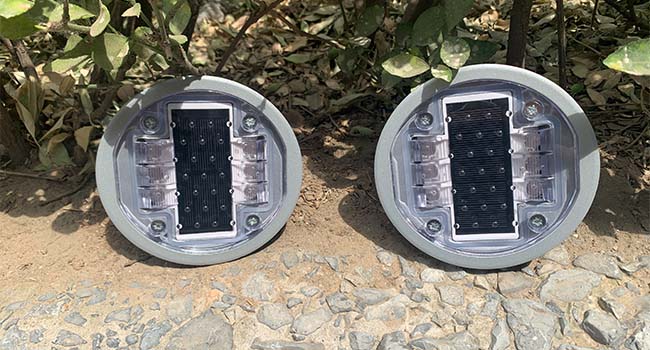
Solar-Powered Road Studs / LED Road Studs
Solar-powered and LED road studs are constructed from plastic or metal and are equipped with solar panels and LED lights. They charge during the day via solar energy and actively emit light at night, providing a striking visual effect. As they require no external power supply, they are energy-efficient and environmentally friendly, making them suitable for all types of roads, particularly at junctions and hazardous sections where enhanced signage is required.Solar-powered road studs significantly enhance night-time road safety. On unlit rural roads, mountain passes and accident-prone sections of motorways, their active illumination ensures visibility and warning effectiveness far surpass that of standard retro-reflective road studs.
Reflective Road Studs: The ‘Invisible Guardians’ of Motorway Safety
Enhancing Night-Time Visibility
The primary cause of most night-time accidents on motorways is lane departure. Reflective road studs create a continuous luminous path at night, clearly marking lane boundaries and the direction of bends, helping drivers maintain the correct driving trajectory. Compared to blurred traditional road markings, the luminous effect of reflective road studs is far more conspicuous; even in low-light conditions, they allow drivers to clearly identify lanes, thereby reducing collisions caused by lane departure at the source.
Maintaining Stable Visibility in Adverse Weather
Adverse weather conditions such as rain, fog and sandstorms can render traditional road markings almost completely invisible, posing significant risks to motorway driving. The retroreflective lenses of reflective road studs, however, possess exceptional resistance to interference; even in adverse weather, they reflect vehicle headlights to ensure clear visibility.
Under normal night-time conditions without light interference, the visibility of retro-reflective road studs can reach 800–1,000 metres, whereas traditional road paint offers only 200–300 metres; in rainy or foggy conditions, retro-reflective road studs still maintain a visibility range of 500–600 metres, whilst traditional paint is virtually invisible; When faced with glare from oncoming headlights, reflective road studs remain clearly identifiable to drivers, whereas traditional paint is completely obscured by the glare; after more than a year of continuous use, reflective road studs show only minor wear that does not affect their functionality, whilst traditional paint fades and peels, rendering it virtually ineffective.
Extending Reaction Time to Handle Emergencies
When driving at high speeds, every second of reaction time is crucial. Reflective road studs can increase visibility to 800–1,000 metres, allowing drivers to spot bends, junctions and obstacles ahead in good time, giving them ample time to slow down or take evasive action, thereby effectively reducing the incidence of sudden accidents.
Particularly on hazardous sections of motorways, such as long downhill gradients and consecutive bends, ample reaction time enables drivers to respond calmly to various unexpected situations. This helps prevent serious accidents—such as rear-end collisions and rollovers—caused by delayed braking or improper evasion manoeuvres, thereby further strengthening the safety defences for night-time motorway driving and safeguarding the safety of every road user.
Reducing Glare Interference and Enhancing Driving Safety
On wide motorways, glare from the headlights of oncoming vehicles often blurs the driver’s vision, making it easy to drift across lanes or veer off course. Raised reflective road studs provide a stable and strong visual cue that cuts through glare interference, helping drivers accurately identify their own lane and avoid accidents caused by glare.
Unlike traditional road markings, which are easily obscured by glare, the retroreflective lenses of these studs directionally reflect light. Unaffected by the intense glare of oncoming headlights, they maintain a clear and conspicuous visual effect at all times. This helps drivers accurately gauge lane boundaries in complex lighting conditions, reducing operational errors caused by visual interference and significantly enhancing the safety and stability of night-time driving on motorways.
Tactile Feedback Alerts to Prevent Drowsy Driving
Some high-quality reflective road studs (such as those from the NOKIN brand) feature a special design: should a driver inadvertently stray from their lane and run over a stud, a distinct vibration and noise are generated. This tactile and auditory feedback serves as a timely reminder for the driver to correct their course, effectively preventing lane departure accidents caused by drowsy or distracted driving.
During long-distance night-time driving, drivers are highly susceptible to fatigue and loss of concentration. In such circumstances, even slight vibrations and noises can quickly reawaken the driver’s attention, enabling them to promptly correct their trajectory and avoid collisions caused by unintentional lane departure. This is particularly suitable for long-distance routes such as motorways and national highways, establishing a crucial early warning defence against drowsy driving.
Core Principles for Selecting Reflective Road Studs
The key to selection is ‘matching the scenario’. On low-traffic sections, cost-effective plastic reflective road studs can be chosen to control the investment in road markings. For high-traffic or adverse weather conditions, aluminium, ceramic or glass materials should be prioritised; their durability extends service life and reduces the frequency of subsequent maintenance.In areas where enhanced warning effects are required, solar-powered or LED reflective road studs are the optimal choice. Their active illumination design maximises road safety at night, providing drivers with clearer guidance.
With their excellent retroreflective performance, durability and environmental adaptability, reflective road studs effectively address the industry-wide challenge of poor night-time visibility, significantly reducing the incidence of night-time accidents on motorways and all types of roads. For road engineering and traffic management authorities, the scientific selection and installation of reflective road studs not only enhances road safety standards but also reduces long-term maintenance costs, making it an essential measure for ensuring road safety.
related
-
Off-Grid Road Safety: The Cost-Benefit Analysis of Solar Road Studs in Provincial ProjectsJun. 24, 2026
-
 The Ultimate Checklist for Inspecting Road Studs Before Installation in Infrastructure ProjectsJun. 04, 2026
 -
 All-in-One vs. Split Solar Street Lights: Which is Better for the Philippine Climate?May. 26, 2026