How to Select the Brightness Level for Solar Road Studs?
Dec 04, 2025
In road traffic safety facilities, the brightness level selection of solar road studs directly impacts nighttime and adverse weather driving safety. Many mistakenly believe higher brightness equals greater safety, yet scientific selection requires considering multiple factors like road conditions and traffic volume. This article provides professional guidance through four key aspects: core selection logic, scenario-specific standards, compliance parameters, and pitfall avoidance.
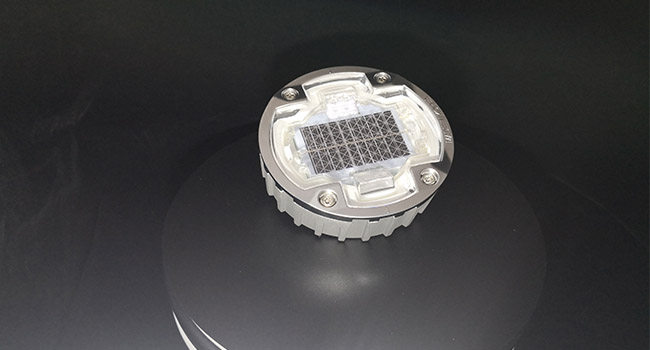
Core Logic for Brightness Level Selection
The core principle for selecting solar road stud brightness is not pursuing extreme brightness, but adhering to the principle of scenario matching + safety balance. This principle must simultaneously meet three requirements: Ensure drivers and pedestrians can clearly identify road stud indicators during low-visibility conditions such as nighttime, rain, and fog. Avoid glare interference that disrupts vision, particularly preventing visual discomfort for non-motorized vehicles and pedestrians. Align with the road's design speed, traffic volume, and surrounding environmental characteristics—for instance, residential areas require livability considerations, while highways prioritize long-distance visibility.
Specifically, the key judgment criteria can be summarized as follows: The higher the road's design speed, the greater the requirements for stud brightness and visibility distance. High-traffic sections require more conspicuous brightness to prevent rear-end collisions. Road stud brightness must be enhanced on unlit or dimly lit sections. Regions prone to rain, fog, or dust storms necessitate models with high-penetration brightness. The ultimate goal is to achieve “warning without glare, guidance without distraction,” ensuring solar road studs fulfill their safety guidance role without creating additional hazards.
Selecting Solar Road Studs by Scenario
Highways / Expressways
Highways and expressways are characterized by high vehicle speeds, extended visibility requirements, and susceptibility to rain and fog. Therefore, road studs must offer high brightness and strong penetration, with vehicle speeds typically ranging from 80-120 km/h. For brightness selection, models with 2000-3000mcd high luminance are recommended. In sections prone to extreme weather, such as areas with frequent rain or fog, enhanced models ≥3000mcd can be chosen to ensure visibility exceeding 800 meters, providing drivers with ample reaction time.
Prioritize flashing mode with a frequency of 1-2 flashes per second. Dynamic flashing rapidly captures driver attention, delivering superior warning effects—especially during prolonged nighttime driving when fatigue is high. For compatibility requirements, solar road studs must be paired with IP68-rated waterproof housings to withstand heavy rain and standing water. Compression strength must be ≥20 tons to endure heavy truck碾压. Batteries should prioritize lithium iron phosphate cells, suitable for extreme temperatures ranging from -25°C to 80°C, and must meet the endurance requirement of “8 hours of charging enabling continuous illumination for 72 hours during continuous overcast/rainy conditions.”
Municipal Roads
Municipal roads like urban main and secondary thoroughfares feature moderate vehicle speeds and frequent mixed traffic flow. They require balancing vehicle visibility needs with pedestrian comfort while avoiding disturbance to nearby residents, with speeds typically ranging from 40-60 km/h. Recommended brightness levels of 800-2000 mcd provide adequate visibility for drivers without causing glare for pedestrians or cyclists.
Solar road studs primarily operate in constant-on mode. Intersections, curves, and school zones may switch to slow-flashing mode at 3-5 flashes per second to enhance warning visibility in specific areas. Yellow is prioritized for lane edges and median strips, while red is used for no-parking zones and stop lines at intersections, aligning with the Road Traffic Signal Specifications to reduce recognition confusion. During installation, maintain a 5-8 meter spacing from streetlights to precisely fill illumination blind spots and prevent visual interference from overlapping light sources.
Residential / Campus Roads
The core requirements for residential and campus roads are safety and livability. With low speeds and a focus on pedestrians/non-motorized traffic, glare that disturbs residents must be strictly avoided, with speeds not exceeding 30 km/h. For stud brightness, low-intensity soft lights (300-800 mcd) are recommended. High-intensity models ≥1500 mcd are strictly prohibited to prevent direct light from shining into low-level residential windows at night and disturbing rest.
Prioritize warm white or yellow constant-on modes for operation, as these emit softer light. For specific sections like parking lot entrances or areas near children's play zones, “sensor-activated” models may be used. These maintain low brightness (100-300mcd) when no vehicles/pedestrians are detected and switch to micro-flashing (500-800mcd) upon detecting movement, balancing energy efficiency with warning functionality.
For supporting requirements: Housing height ≤8mm to prevent tripping hazards. Materials should be scratch-resistant PC or aluminum alloy to withstand daily foot traffic and friction. Installation spacing: 1.5-2 meters. Position along the boundary between sidewalks and vehicle lanes to clearly demarcate passage areas and prevent non-motorized vehicles from entering sidewalks.

Comparison Table of Selection Parameters for Solar Road Studs on Three Types of Roads
|
Selection Dimension |
Highways / Expressways |
Municipal Roads (Primary / Secondary) |
Residential / Campus Roads |
|
Road Speed |
80–120 km/h |
40–60 km/h |
≤30 km/h |
|
Recommended Brightness |
2000–3000 mcd (extreme ≥3000 mcd) |
800–2000 mcd |
300–800 mcd |
|
Working Mode |
Flashing (1–2 times/sec) |
Constant on (intersections: slow flashing 3–5 times/sec) |
Constant on (optional sensor-activated) |
|
Waterproof Rating |
IP68 |
IP65 |
IP65 |
|
Compression Strength |
≥20 tons |
≥15 tons |
≥5 tons |
|
Lighting Angle |
≥100° |
≥120° |
≥130° |
|
Installation Spacing |
5–10 m |
8–15 m |
1.5–2 m |
|
Core Requirement |
Strong penetration, long-distance visibility |
Stable guidance, anti-interference |
Soft illumination, non-disturbing |
Essential Specifications for Selecting Solar Road Studs
Brightness Unit Standards
Within the industry, the brightness of solar road studs is uniformly measured in mcd. Some unscrupulous vendors may confuse the concept by using “lumens (lm)” instead. While 1 mcd is approximately equal to 0.001 lm, the two units measure different dimensions. Mcd is more suitable for assessing the brightness of point light sources like road studs. When selecting products, explicitly request a “third-party verified brightness report” from the supplier. This report must detail the testing environment's temperature, voltage, and actual measured brightness values.
Note that measured brightness values are not theoretical estimates and can be assessed through simple comparison. Under identical conditions, a 2000mcd road stud should appear brighter than a smartphone flashlight (approximately 1000mcd) when viewed from 10 meters away with the naked eye, yet remain non-glaring.
Certification and Warranty
High-quality solar road studs require multiple certifications and clear warranty terms. Essential certifications include CE certification (EU safety standard) and ROHS certification (environmental standard to prevent heavy metal contamination). Regarding warranty requirements, the overall product warranty period should be ≥2 years, with core components like LED chips and batteries warrantied for ≥3 years. Avoid short-term products with only a 1-year warranty, as battery life typically spans 3-5 years. Short warranties often lead to maintenance challenges later on.
Supplementary Parameter Reference
Beyond core specifications, prioritize the following auxiliary parameters:
LED chips: Opt for leading brands like Nichia or Epistar. These chips offer superior brightness stability and slower decay rates, with ≤30% light loss after 50,000 hours. For battery type, lithium iron phosphate batteries outperform standard lithium batteries. Lithium iron phosphate batteries have a lifespan of 3-5 years and withstand extreme temperatures, while standard lithium batteries last only 1-2 years and are prone to failure in cold conditions. Regarding charging efficiency, select high-efficiency monocrystalline silicon solar panels with a conversion efficiency ≥20%. These panels charge efficiently even on cloudy days, preventing the issue of “only lighting up on sunny days and failing on cloudy days.”
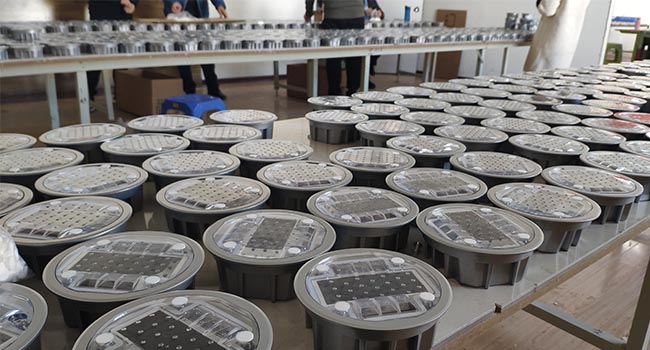
Key Considerations for Selecting Solar Road Studs
Avoid the “Brighter Is Better” Fallacy
Highways/expressways require 2000-3000mcd studs; ≥3000mcd for extreme weather. Municipal roads should use 800-2000mcd, avoiding over 2000mcd to prevent light pollution. Residential/campus roads: Use 300-800 mcd. Strictly prohibit ≥1500 mcd to prevent glare.
Prioritize Scenario Adaptation
Climate adaptation: In regions with frequent rain/fog, choose high-penetration LED (e.g., yellow, amber) and avoid blue/white LED with poor penetration. For environmental adaptation, residential areas should use warm-toned soft lights, while sensor-activated lights are recommended near schools and hospitals to minimize light pollution. Road segment adaptation requires attention: flashing mode for intersections, curves, and slopes; constant-on mode for straight sections.
Reject Non-Standard Products
Mandatory documentation includes third-party luminance test reports and CE/ROHS certifications. Essential warranty inquiries cover: overall warranty ≥2 years; battery and LED chip warranties ≥3 years. Critical specifications include: waterproof rating (IP68 for highways, IP65 for other roads); load-bearing capacity (select products rated ≥5-20 tons based on road traffic types). Avoid products with ambiguous specifications or verbal guarantees.
The core of scientifically selecting solar road stud brightness levels lies in balancing scene adaptation and safety. Precise selection must integrate road speed limits and traffic flow characteristics while verifying compliance certifications. This approach mitigates glare interference and ensures effective nighttime road safety guidance.
related
-
 Off-Grid Road Safety: The Cost-Benefit Analysis of Solar Road Studs in Provincial ProjectsJun. 24, 2026
 -
 The Ultimate Checklist for Inspecting Road Studs Before Installation in Infrastructure ProjectsJun. 04, 2026
 -
 All-in-One vs. Split Solar Street Lights: Which is Better for the Philippine Climate?May. 26, 2026