The Complete Guide to LED Street Lights with Photocell Sensors
Mar 05, 2026
As demand for energy-efficient, smart lighting continues to rise, LED street lights equipped with light-sensing photocells have become the preferred solution for urban, rural, and industrial illumination. Leveraging core advantages like automatic light sensing and intelligent on/off functionality, they address the pain points of traditional street lights—cumbersome manual operation and excessive energy consumption—while adapting to diverse lighting scenarios, balancing practicality and cost-effectiveness. This guide comprehensively analyzes LED street lights through their definition, operating principles, control modes, core advantages, and installation considerations, empowering readers to gain in-depth product knowledge for informed selection and standardized use.
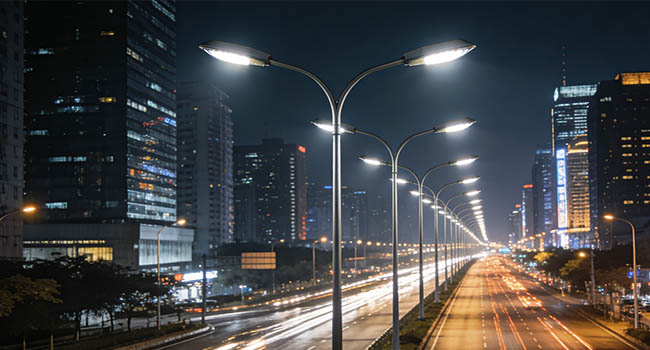
What Are LED Street Lights with Photocells and How Do They Work?
Definition of LED Street Lights with Photocells
LED street lights with photocells are integrated lighting devices combining high-efficiency LED light sources with light-sensing sensors (photosensitive components). Their core feature is the ability to operate without manual intervention. By continuously monitoring ambient light levels through the sensor, they automatically control the lamp's on/off status or dimming, achieving intelligent operation that “turns on automatically at dusk and off at dawn.” This lamp's core components consist of two parts working in tandem to ensure both lighting performance and intelligence: the high-efficiency LED light source serves as the illumination core, offering energy savings, extended lifespan, and high luminous efficacy.
Compared to traditional incandescent or sodium lamps, LED street lights with light sensors reduce energy consumption by over 50% and achieve a lifespan exceeding 50,000 hours. As the control core, the light sensor precisely captures ambient light changes, converting light signals into electrical signals to trigger the lamp's on/off control—making it the key component enabling smart LED street lights.
Working Principle of LED Street Lights with Light Sensors
The operating mechanism of LED street lights with light sensors is straightforward and requires no manual intervention. The light sensor continuously monitors ambient light intensity and maintains a preset threshold. When ambient light falls below this threshold, the sensor immediately sends an electrical signal to activate the LED street light, ensuring illumination.When ambient light exceeds the threshold, the sensor sends another signal to automatically turn off the LED street light, preventing unnecessary energy consumption. This fully automated process requires no manual supervision, offering rapid and precise responses that ensure timely illumination while minimizing energy waste.
Three Control Modes of the Photo Controller
Timed Control Mode
This mode allows users to preset street light activation and deactivation times. street lights operate strictly according to the preset schedule, unaffected by changes in external light intensity. The core advantage of this mode is its stability and reliability, making it suitable for scenarios with fixed lighting schedules. Examples include school campuses with consistent arrival and dismissal times requiring lighting at specific hours, unaffected by cloudy or rainy conditions; industrial parks with fixed production shifts and defined nighttime lighting periods, eliminating the need for adjustments based on natural light changes; and gated communities with nighttime security lighting that can be preset to operate from 6:00 PM to 6:00 AM the following morning to ensure safety.
Daylight Control Mode
Daylight Control Mode is the core operational mode for light sensors, functioning entirely based on preset illumination intensity thresholds. It is also the most commonly used mode for smart LED street lights. Its core logic is “lighting determines activation/deactivation”: lights automatically turn on when ambient light falls below the threshold and turn off when it exceeds the threshold. This mode adapts to seasonal changes (longer daylight in summer, shorter daylight in winter) without requiring manual time adjustments.
This mode offers broad applicability: Urban main and secondary roads require timely illumination based on natural light changes to ensure traffic safety. - Rural roads without manual monitoring rely on intelligent light sensing for automatic lighting. - Residential community roads adapt to residents' daily routines, automatically lighting at dusk and extinguishing at dawn, balancing energy efficiency and convenience.
Mixed Mode (Time and Daylight Control)
This hybrid control mode combines the advantages of scheduled control and daylight control, operating under the logic of “daylight priority with scheduled fallback” to balance precision and flexibility. Specifically, it prioritizes operation based on light sensor readings (daylight control mode) while strictly adhering to preset time ranges to prevent erroneous activation or deactivation of street lights due to abnormal lighting conditions.
Ideal for scenarios demanding high light quality, such as urban thoroughfares and bustling commercial streets that require adaptation to natural light variations while ensuring fixed midnight shutdowns. Transportation hubs benefit from timely illumination at dusk while preventing premature LED activation during early morning low-light periods, thereby avoiding energy waste.
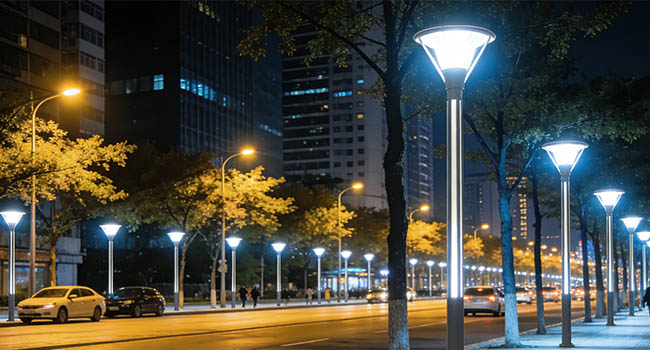
Advantages of LED Street Lights with Photocells
Energy Savings and Reduced Consumption
LED street lights equipped with light sensors automatically activate and deactivate based on intelligent light detection, fundamentally eliminating inefficient energy consumption from “daytime illumination,” “premature activation,” and “delayed shutdown.” Combined with the inherent energy-saving properties of LED light sources, the energy-saving effects are highly significant. Compared to traditional sodium lamps, standard LED street lights save approximately 30% in energy consumption. Photocell-controlled LED street lights achieve a comprehensive energy savings rate of up to 50%, substantially reducing electricity costs in large-scale road lighting projects.
Smart and Convenient
Manual operation to turn LED street lights on or off is eliminated, completely bypassing the cumbersome process of “manual patrol operations” and significantly reducing labor maintenance costs. For large-scale lighting projects, this saves substantial labor costs while preventing energy waste or lighting gaps caused by human error (e.g., forgetting to turn off lights or delayed activation).
Stable Performance
LED light sources have a lifespan exceeding 50,000 hours, far surpassing traditional sodium lamps (approximately 20,000 hours). The light sensors incorporate high-quality photosensitive components with strong anti-interference capabilities, adapting to harsh weather conditions like rain, snow, and fog without easy damage. This combination extends the overall lifespan of LED street lights with light sensors, substantially reducing equipment replacement frequency and lowering long-term maintenance costs.
Enhanced Lighting Safety
They respond in real-time to changes in ambient light, turning on promptly at dusk to prevent safety hazards like traffic accidents or theft caused by insufficient illumination. At dawn, lights automatically turn off, preventing energy waste while minimizing light pollution's impact on residents' rest, making smart LED street lights more suitable for residential environments.
Wide Adaptability
Supports three controllable modes for flexible adjustment based on diverse lighting needs. Widely applicable to urban roads, rural roads, campuses, industrial parks, parking lots, residential communities, and more, greatly enhancing the versatility of LED street lights.
Precautions for Installing LED Street Lights with Photocells
Photocell Sensor Placement
The sensor's installation location directly impacts detection accuracy and must meet two core requirements: Position it where ambient light is fully accessible, avoiding obstruction by trees, buildings, or billboards. Otherwise, inaccurate light detection may cause erroneous LED light activation or deactivation. Additionally, avoid direct exposure to intense midday sunlight to prevent sensor damage and reduced lifespan. Installation on the side of the light pole, facing the direction of ample natural light, is recommended.
Wiring Safety Standards
Wiring must strictly adhere to safety protocols to prevent short circuits, electrical leakage, and other hazards. Before connecting wires, power must be disconnected. Distinguish positive and negative terminals to ensure correct wiring; reverse polarity can damage equipment. All wiring points require waterproofing and moisture protection, especially in outdoor settings. Use waterproof connectors, sealants, and similar materials to prevent rainwater or humidity from entering junction boxes, which could cause short circuits in light-sensing controlled LED street lights.
Light Intensity Threshold Settings
Light intensity thresholds must be reasonably adjusted based on actual usage scenarios to prevent improper settings from affecting performance. In rural areas with minimal light pollution and lower ambient light levels, thresholds can be set lower to ensure timely activation at dusk. In urban areas with significant light pollution and relatively high ambient light levels, thresholds can be set higher to prevent premature activation of smart LED street lights, thereby conserving energy.
Street Light Installation Height and Angle
Installation height and angle must be adjusted according to specific site requirements to ensure uniform illumination without glare. Installation height should be adjusted based on road width, typically ranging from 5 to 12 meters. Wider roads require higher installations to fully illuminate the roadway. Lighting angles should be adjusted by tilting the LED light sources to prevent glare from directly shining into the eyes of pedestrians or drivers. This ensures uniform road illumination without dark spots, allowing LED street lights with light sensors to deliver optimal performance.
Post-Installation Testing and Calibration
Upon completion, promptly conduct testing and commissioning to verify proper operation. Perform simulated tests: cover the light sensor with an obstruction (simulating dusk) to observe if the LED street light activates correctly; remove the obstruction (simulating dawn) to verify proper shutdown. Conduct a comprehensive inspection, rechecking the waterproofing of wiring connections, the stability of the street light installation, and the parameter settings of the control mode to prevent potential failures.
LED street lights with light sensors represent an energy-efficient, intelligent, and high-performance lighting solution. Their core advantage lies in “smart light sensing and automatic activation/deactivation,” significantly reducing energy consumption and maintenance costs while adapting to diverse lighting scenarios to ensure illumination safety. As the smart lighting industry continues to evolve, intelligent LED street lights will increasingly become the mainstream choice for urban, rural, and industrial lighting. They not only provide more convenient and safer lighting environments but also contribute to achieving the “dual carbon” goals, delivering long-term economic and social benefits.
related
-
Off-Grid Road Safety: The Cost-Benefit Analysis of Solar Road Studs in Provincial ProjectsJun. 24, 2026
-
 The Ultimate Checklist for Inspecting Road Studs Before Installation in Infrastructure ProjectsJun. 04, 2026
 -
 All-in-One vs. Split Solar Street Lights: Which is Better for the Philippine Climate?May. 26, 2026